
Brake Repair in Gig Harbor and the Key Peninsula
Squealing, grinding, or a pedal that pulses or sinks? At our six-bay shop on the Key Peninsula, ASE Certified technicians inspect your whole brake system, explain what they find, and recommend only the work it needs, on cars, trucks, vans and SUVs of every make.
Warning signs your brakes need attention
Brakes usually give you warning signs before a small problem becomes a big one. Here's what the common symptoms tend to mean.
If the pedal sinks toward the floor, the red brake light stays on with the parking brake released, or you see fluid near a wheel, don't keep driving. Call us at (253) 884-3431 first and we'll talk it through with you.
- Squealing: many pads have a small metal wear indicator that squeals against the rotor when the pad gets thin.
- Grinding: often the pad material is worn away and its steel backing is cutting into the rotor. Come in soon. On gravel roads, a stone caught between the rotor and the dust shield can grind, too.
- Pulsing pedal or shaking steering wheel: usually uneven rotor thickness, often called warped rotors. A rapid buzz through the pedal during a hard stop on wet or loose pavement is normal ABS operation.
- Pulling to one side: a sticking caliper, seized slide pins or a collapsed brake hose can make one side brake harder or drag. Alignment and tire problems can cause a pull, too.
- Soft, spongy or sinking pedal: air in the lines, a fluid leak, overheated fluid, or a failing master cylinder. Don't wait on this one.
- Warning lights: an amber ABS light means the anti-lock system has detected a fault. A red brake light can mean the parking brake is on, the fluid is low, or there's a hydraulic problem.
What our brake inspection covers
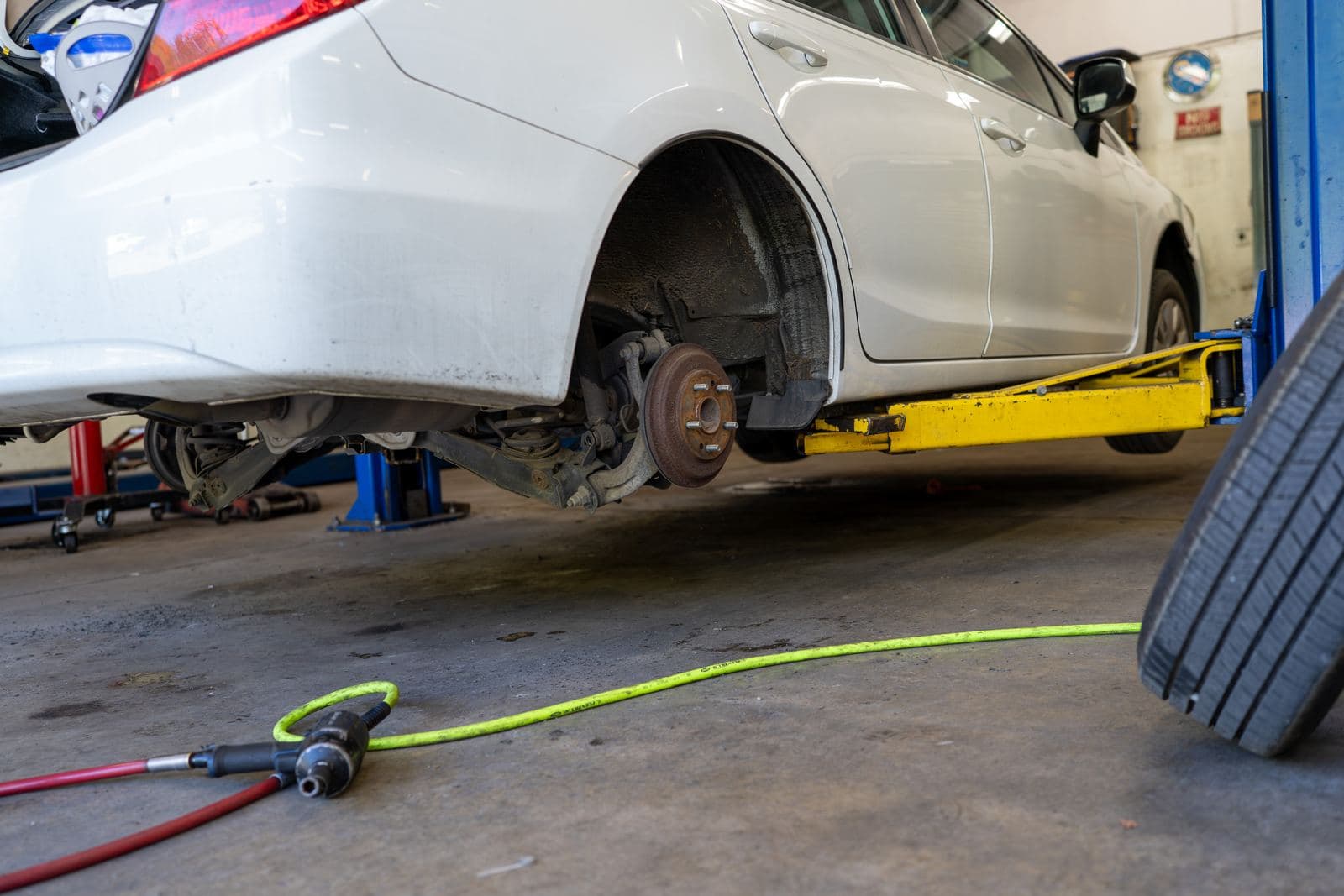
A squeal at one wheel doesn't mean you need parts at all four. With your vehicle on the lift, we check the whole system and measure wear instead of guessing.
Pads and rotors are replaced in pairs on the same axle so both sides stop evenly. Worn front brakes don't automatically mean the rears need work, and we'll tell you where each axle stands.
Uneven wear tells a story. If one pad is worn much more than its partner, a caliper or slide pin usually isn't moving freely, and new pads alone won't fix the problem. If a pull turns out to be alignment rather than brakes, we can check and adjust it on our own in-house alignment machine, with no trip to another shop.
- Pad and shoe thickness at every wheel, including the inner pads you can't see from outside
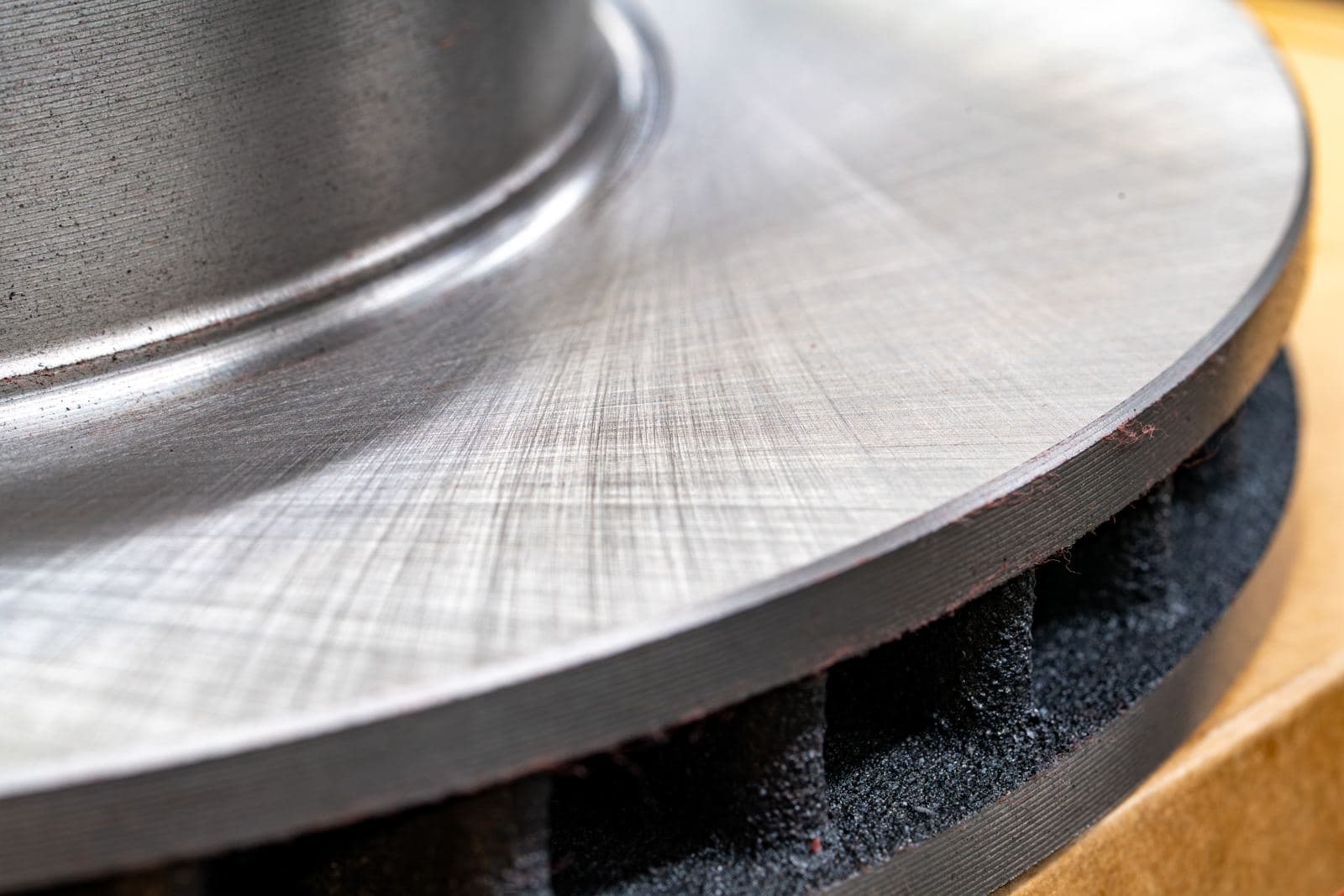
- Rotors and drums, measured against the manufacturer's wear limits
- Calipers, slide pins and hardware for sticking, leaks or uneven wear
- Brake lines and hoses for rust, cracks, swelling and leaks
- Brake fluid level and condition
- Parking brake operation
- ABS and brake system trouble codes, read with Snap-on and Autel scan tools
Brake fluid, rust and wet weather
Most vehicles use glycol-based brake fluid, which slowly absorbs moisture over time, mostly through rubber hoses and seals. Water lowers the fluid's boiling point. On a long, steep downhill or with a heavy load, hot fluid can boil and leave you with a soft pedal right when you need it.
Moisture also corrodes the system from the inside, including caliper pistons, steel lines and the small valves in the ABS unit. Those parts cost much more to repair than a fluid exchange. Many manufacturers call for new brake fluid every two or three years regardless of mileage. We check the fluid's condition during a brake inspection and go by your vehicle's factory maintenance schedule.
Wet winters are hard on brake hardware, too. Rotors rust, slide pins seize and steel lines corrode. Grit from gravel roads, common on the Key Peninsula, can add to pad and rotor wear. We look closely at vehicles that sit outside or spend time on gravel.
What to expect when you bring it in
Request an appointment online or call (253) 884-3431. We're open Monday through Friday, 6:00 AM to 2:30 PM, and you can drop off as early as 6:00 AM. After hours, leave your keys in the key drop to the left of the customer lounge door. If you'd like to wait, there's a customer waiting area.
Before any work starts, we explain what we found and get your approval. No upselling. We use OEM and OE-equivalent parts, and every repair is backed by our 2-year/24,000-mile warranty.
What We Work On
- Brake pad and shoe replacement
- Rotor inspection, measurement and replacement
- Caliper inspection, service and replacement
- Brake fluid exchange and bleeding
- Brake line and hose inspection and repair
- ABS and brake warning light diagnosis
- Parking brake and electronic parking brake service
- Brakes on domestic, import, European, hybrid and electric vehicles
Every repair is backed by our 2-year/24,000-mile warranty. Warranty details
Common Questions
Do I need new rotors every time I get new pads?
Not always. We measure your rotors and check them for scoring, heat spots and cracks. If they're within the manufacturer's spec and in good shape, we'll tell you. If they're too thin, damaged or causing a pulsing pedal, replacing them along with the pads gives the new pads an even surface to seat against.
Why do my brakes make noise for the first few stops in the morning?
Overnight dampness leaves a thin film of rust on the rotors, and the first few stops scrub it off. That's normal, especially in wet weather. A squeal that lasts your whole drive, or grinding that doesn't go away after a few stops, is worth a look.
Is it safe to drive with the ABS light on?
Your regular brakes usually still work, but anti-lock braking, and often stability control, may be switched off, so a hard stop on wet pavement could lock the wheels. If the red brake light is also on or the pedal feels different, call before driving. We read the ABS codes, then test the sensor, wiring or part they point to before replacing anything.
Do you do brakes on hybrids, EVs and European cars?
Yes. Many newer vehicles, including a lot of European models, have electronic parking brakes that usually need a scan tool to retract them for pad work, and we use professional scan tools for that. Hybrids and EVs rely heavily on regenerative braking, so pads often last longer, but light use can let calipers stick and rotors rust. Brake work is on the conventional brake system; for anything involving the high-voltage system, call first to confirm.
Is brake work covered by a warranty?
Brake repairs are backed by our 2-year/24,000-mile warranty, the same as every repair we do. Our warranty page explains how it works.
More questions? See our FAQ or call (253) 884-3431.
Related Services
Suspension & Steering
Clunks, wandering, or uneven tire wear? We repair struts, ball joints, tie rods, and air suspension, with alignment in-house.
Wheel Alignment
Pulling, a crooked steering wheel or uneven tire wear? We align it in-house on our own machine, with no trip to another shop.
Oil Changes & Maintenance
The oil and filter your manufacturer specifies, a multi-point inspection every visit, and factory schedules tracked for you.
Schedule Brake Repair
We’re open Monday–Friday, 6:00 AM–2:30 PM, right next to Key Center. Drop off at opening, or leave your keys in the after-hours key drop.