
Check Engine Light Diagnostics on the Key Peninsula
A code reader tells you which system flagged a problem, not which part failed. Our ASE Certified technicians pull the codes, study the live data and test the suspect parts to pin down the cause, then explain it and get your OK before any repair.
Why a code isn't a diagnosis
When the light comes on, your engine computer has stored a trouble code. In most cases, that code tells you which self-test failed, not which part caused it. That's why a code read alone can turn into parts swapping: replace whatever the code mentions, clear the light, and watch it come back.
We treat the code as the first clue and test from there to confirm the cause before recommending a repair. A few common codes show why, since each one has several possible causes:
- P0171 (system too lean): a vacuum leak such as a cracked hose or leaking intake gasket, a dirty mass airflow sensor, or low fuel pressure from a weak pump or clogged filter
- P0300 (random or multiple misfires): worn spark plugs, ignition problems, a vacuum leak, fuel delivery trouble or low compression
- P0420 (catalyst efficiency below threshold): a worn catalytic converter, a faulty oxygen sensor or an exhaust leak
Solid or flashing: how urgent is it?
How the light behaves tells you what to do next. Your owner's manual covers what it means on your vehicle.
- Solid, and the car drives normally: a fault has been stored. You can usually keep driving for now, but book a diagnosis soon, before a small problem turns into a bigger one.
- Flashing: the engine is misfiring badly enough to overheat and damage the catalytic converter. Ease off, avoid hard acceleration, heavy loads and long climbs, and get it checked as soon as possible.
- On along with a red temperature or oil pressure warning: pull over when it's safe and shut the engine off.
How we track down the cause
Our process is the same whether you drive a work truck, a minivan or a BMW. Two of our technicians bring 20 and 35+ years of experience to the problems a scan tool alone won't solve.
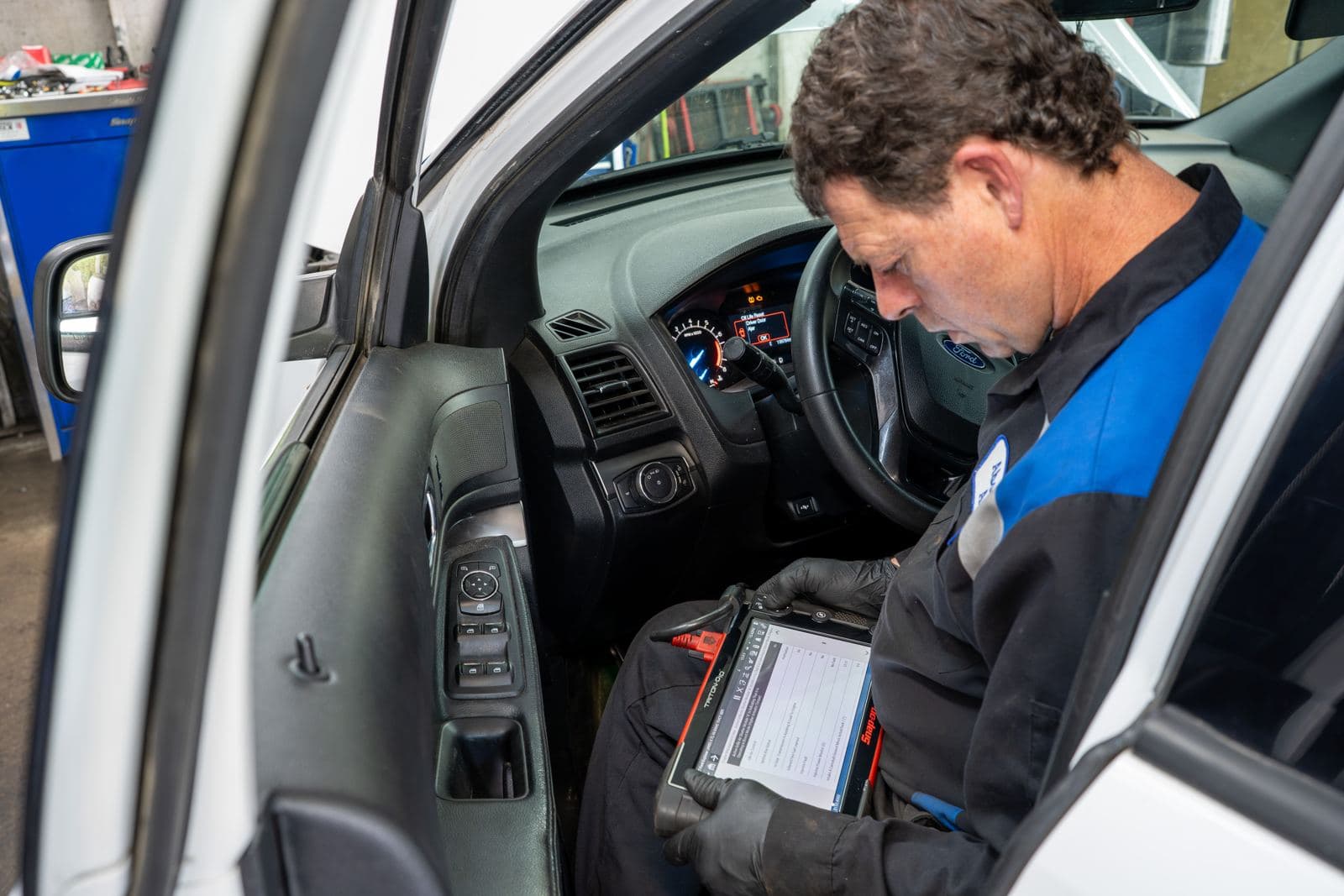
- Pull codes and freeze frame data with Snap-on and Autel scan tools, including manufacturer-specific codes that many basic code readers can't access
- Watch live data with the engine running, such as fuel trims, oxygen sensor readings and, on many vehicles, misfire counts
- Test suspect sensors, wiring and connectors with a digital multimeter
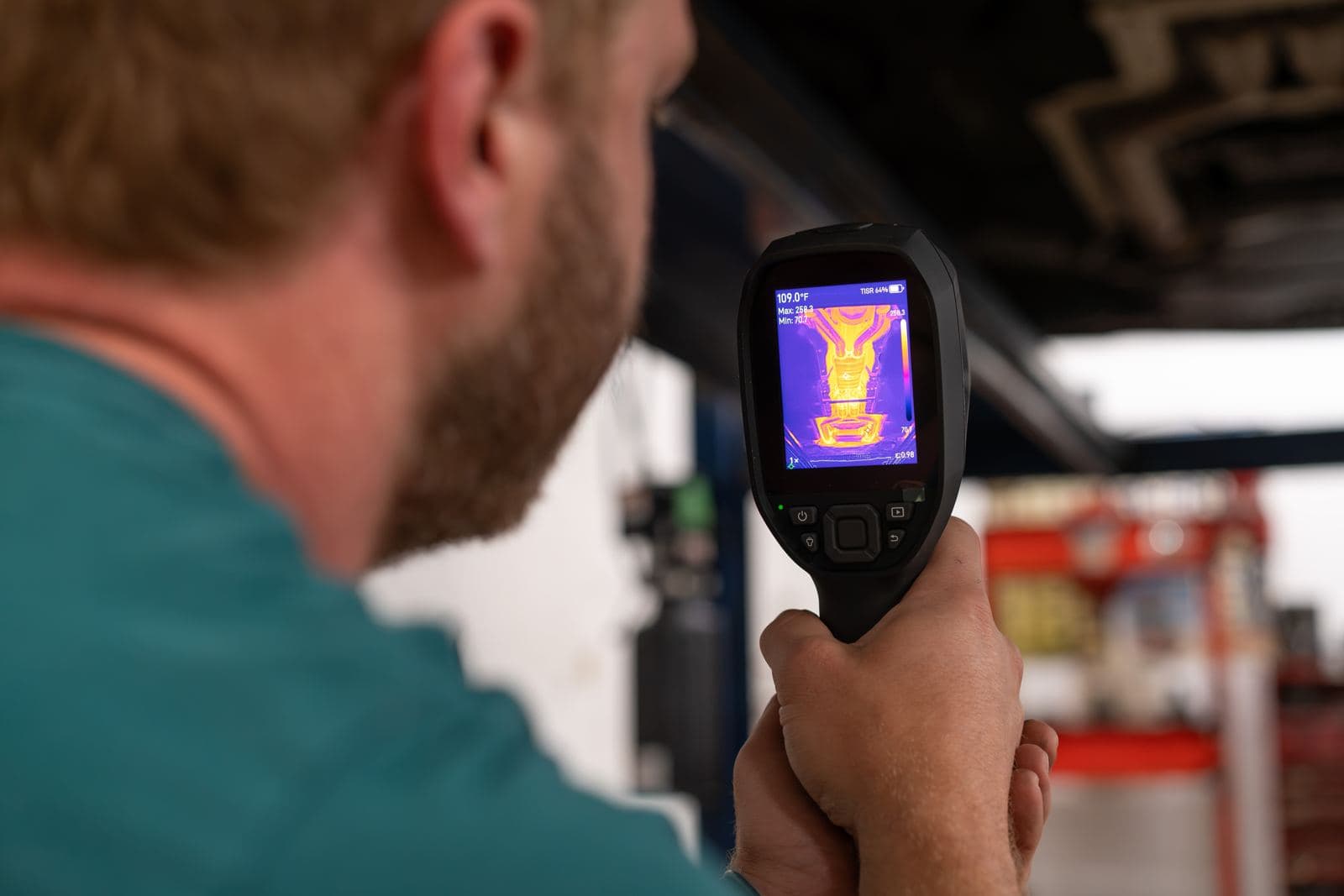
- Use a thermal imaging camera to spot temperature differences, such as a cylinder running cooler than the rest or a thermostat that isn't opening
- Explain what we found and what the fix involves, and get your approval before any work
- After the repair, clear the codes and recheck the system
Rough idle, hesitation, stalling and poor mileage
Drivability problems don't always turn on the light. A shaky idle, a stumble when you accelerate, stalling at stops or falling fuel economy still deserve careful testing.
Tell us when it happens: cold or warm, idling or at highway speed, dry days or wet. If it only acts up under load, like climbing the hills around Gig Harbor, we'll try to recreate it on a test drive. Common causes include:
- Vacuum leaks from cracked hoses or intake gaskets
- Worn spark plugs, failing ignition coils or cracked coil boots, which can act up in damp weather
- A dirty mass airflow sensor or aging oxygen sensors
- Clogged fuel injectors or a weak fuel pump
- A dirty throttle body or a sticking EGR valve
- A thermostat stuck open, which hurts fuel economy and heater output, especially in cold weather
What to expect when you bring it in
Call (253) 884-3431 or request an appointment online. We're open Monday through Friday, 6:00 AM to 2:30 PM, and drop-off starts at 6:00 AM. After hours, leave your keys in the key drop to the left of the customer lounge door.
It helps to tell us what you've noticed: when the light came on, whether it's solid or flashing, and any change in how the car runs. If you've already had the code read, bring that along too.
We diagnose all makes and models, domestic and import, including European makes, hybrids and EVs. For a high-voltage battery or drive system concern on a hybrid or EV, please call first to confirm we can help.
What We Work On
- Check engine light diagnosis, solid or flashing
- Generic OBD-II and manufacturer-specific code reading
- Freeze frame and live data analysis
- Circuit and component testing with a digital multimeter
- Thermal imaging diagnosis
- Misfire, fuel trim and vacuum leak diagnosis
- Sensor replacement (O2, MAF, MAP, crankshaft, camshaft)
- Rough idle, hesitation, stalling and fuel economy troubleshooting
- Code clearing and system recheck after the repair
Every repair is backed by our 2-year/24,000-mile warranty. Warranty details
Common Questions
Can I keep driving with the check engine light on?
If it's solid and the car drives normally with no other warnings, you can usually keep driving for a short while, but have it checked soon. If it's flashing, drive as little and as gently as possible, since a severe misfire can damage the catalytic converter. If a red temperature or oil pressure warning comes on too, pull over when it's safe and shut the engine off.
I already had my code read for free. Why do I need a diagnosis?
A code read tells you which code is stored, but it doesn't test anything. A diagnosis is the testing that follows, and it shows which part or circuit actually failed, so you don't pay for parts you didn't need. Bring the code with you anyway. It's a useful starting point.
Could it just be a loose gas cap?
Sometimes. A loose or worn gas cap can set an evaporative emissions (EVAP) leak code. Tighten it until it clicks and drive normally. The light may go out on its own once the system rechecks itself, which can take several days of driving. If it stays on or comes back, there may be a leak elsewhere in the EVAP system, such as a cracked hose or a sticking purge or vent valve.
Should I clear the code before I bring the car in?
Please don't. Clearing the code also erases the freeze frame data, a snapshot of conditions such as speed, engine temperature and fuel trims when the fault was recorded. That snapshot helps us find the cause, and if the fault is still there, the light will usually come back anyway.
The light went off on its own. Should I still have it checked?
It's a good idea. The light can turn off after the engine computer stops seeing the fault for a few drives, but the code usually stays stored in memory for a while. If the light keeps coming and going, an intermittent fault is easier to track down while that stored code and its freeze frame data are still there.
More questions? See our FAQ or call (253) 884-3431.
Related Services
Engine Repair
Leaks, overheating, timing belts and chains, head gaskets and noises, plus JASPER remanufactured engines when repair isn't worth it.
Electrical Repair
Dead batteries, battery drain, charging problems and warning lights, tested and traced to the cause before parts get replaced.
Transmission Repair
Diagnosis, fluid service, clutch and solenoid repair, CV and driveline work, and JASPER remanufactured transmissions when needed.
Schedule Check Engine Light Diagnostics
We’re open Monday–Friday, 6:00 AM–2:30 PM, right next to Key Center. Drop off at opening, or leave your keys in the after-hours key drop.