
Auto Electrical Repair on the Key Peninsula
A dead battery isn't always a bad battery. When your car cranks slowly, goes dead overnight, or lights up the dash, our ASE Certified technicians test the battery, charging system, wiring and modules to pin down the cause before replacing anything.
Signs your electrical system needs attention
Electrical problems often start small and get worse. Catching them early can mean a simpler repair and fewer mornings stuck in the driveway. Call us if you notice any of these:
- Slow, labored cranking, especially on cold mornings
- A click, or nothing at all, when you turn the key or press start
- A battery that's dead after the car sits for a day or two
- A battery or charging warning light on the dash
- Headlights that dim at idle or flicker
- Windows, locks or gauges that work some days and not others
- Several warning lights at once, or a communication error on the display
- A fuse that keeps blowing, or a burning-plastic smell
Why batteries struggle in cold, wet weather
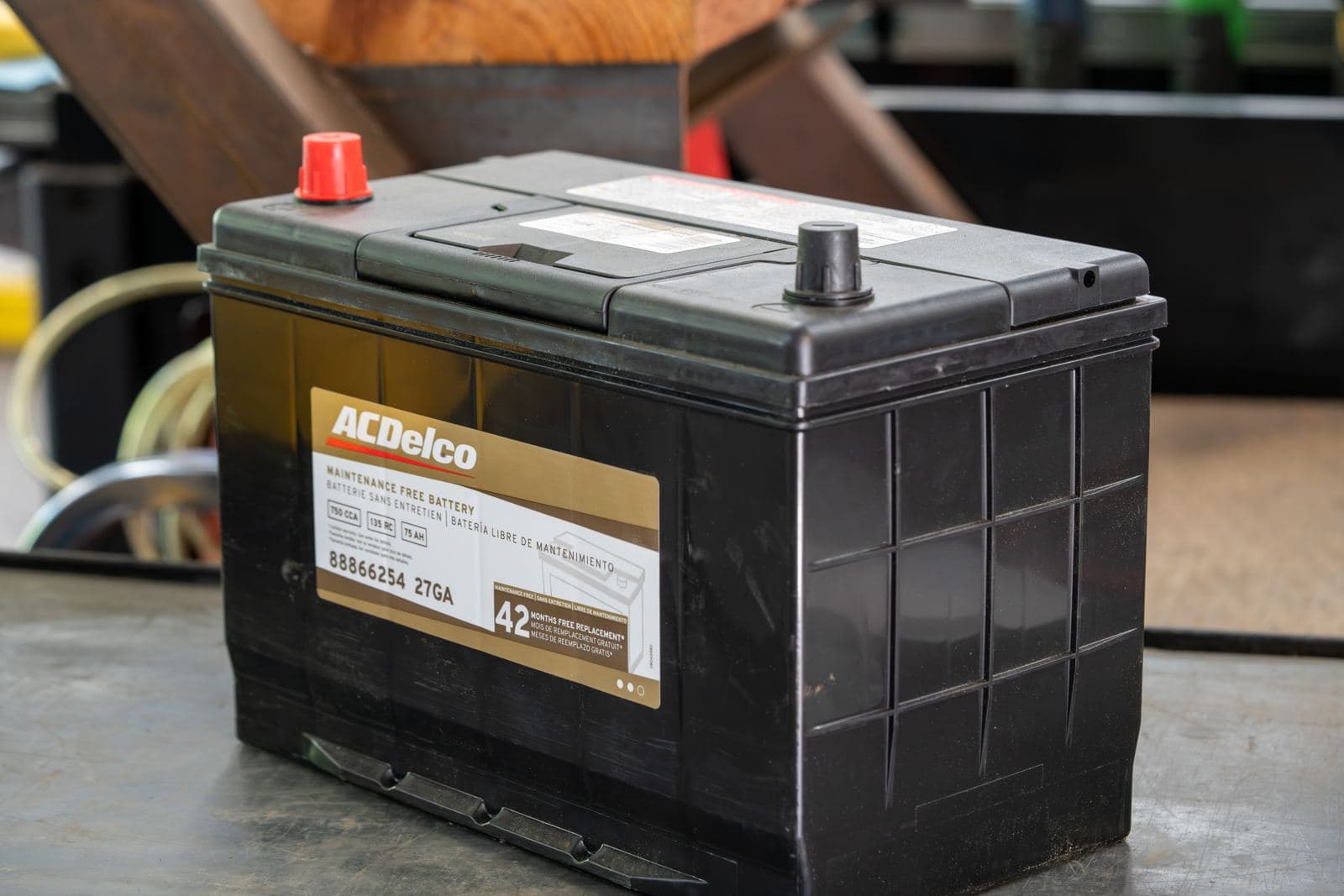
A battery puts out less cranking power as the temperature drops, while a cold engine takes more effort to turn over. A battery that was borderline in the fall may quit on the first cold morning.
Short trips add to it. If most of your driving on the Key Peninsula is a few miles to the store and back, the alternator may not have time to fully recharge the battery, especially with the headlights, wipers and defroster running. Moisture can also speed up corrosion on terminals, connectors and grounds.
Many batteries last roughly three to five years, depending on climate and how the car is driven. If yours is in that range, a quick test before winter is worth it.
How we track down the cause
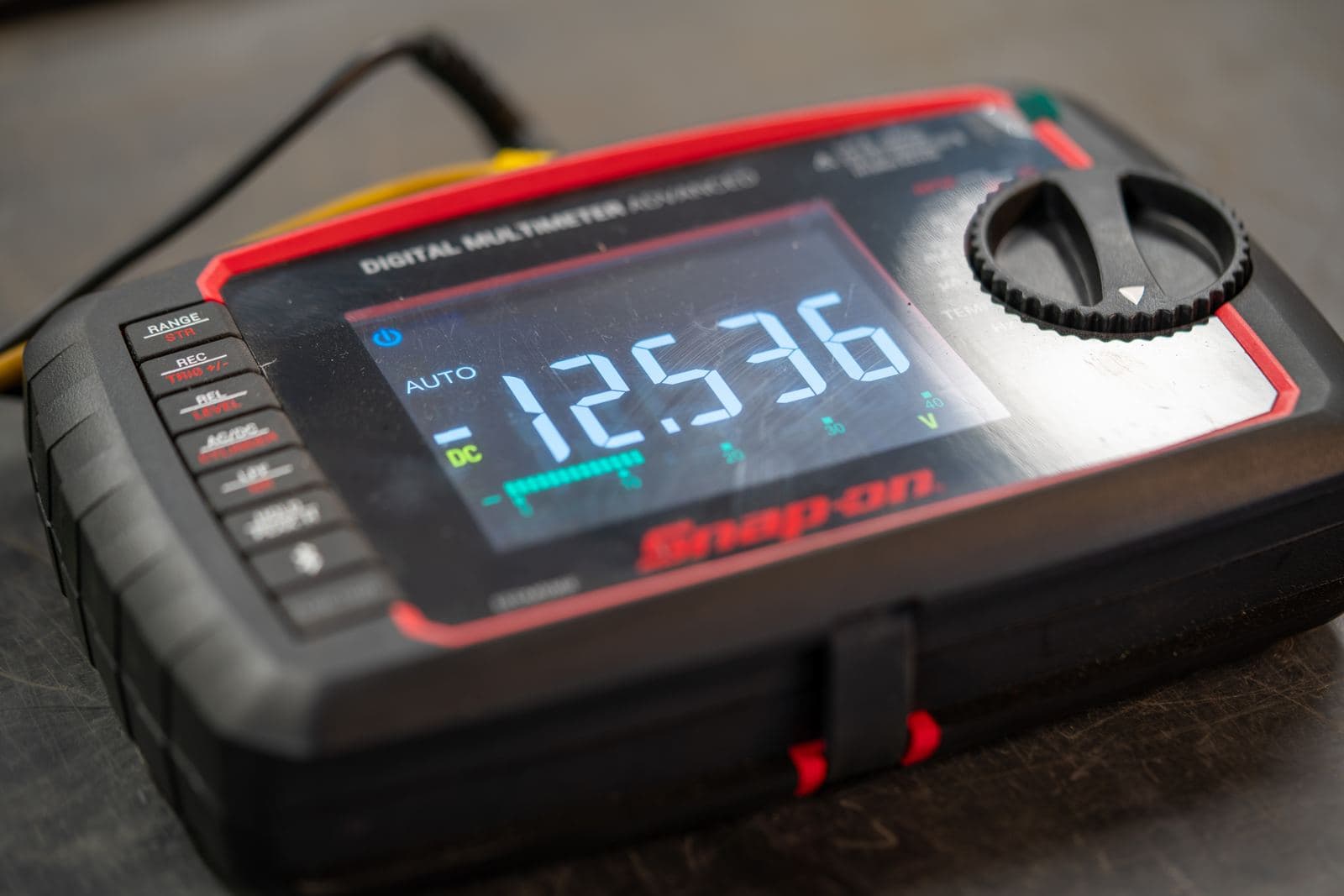
We start with the basics. We test the battery's condition, check the alternator's charging output and the starter's current draw, and look at the battery cables and connections, using a battery tester and a digital multimeter. That helps show whether the battery, alternator, starter or cables are at fault, so you're not replacing a battery that wasn't the problem.
If your battery keeps going dead, we run a parasitic draw test. We let the car's modules go to sleep, measure how much current it pulls with everything off, then check circuits one at a time to narrow down what's still drawing power. Common culprits include a stuck relay, an aftermarket accessory, a light that stays on, or a module that keeps waking up. A thermal imaging camera can help spot a component that's warm when it should be off.
For warning lights, intermittent accessories and network faults, we use Snap-on and Autel scan tools to read codes and live data from the vehicle's modules and check communication on the CAN-bus network. From there, we use wiring diagrams and the multimeter to trace the fault to a specific wire, connector, ground or component.
What the repair involves
Many fixes are straightforward: a new battery of the right size, type and cold-cranking rating, cleaned or replaced terminals, or a new alternator or starter. Many vehicles with engine start-stop need a specific battery type, such as AGM. Other problems take more tracing, like a chafed harness, a corroded connector, a bad ground, or wiring chewed by rodents.
Newer vehicles often add a step. Many replacement modules have to be programmed or coded to your vehicle before they'll work correctly, and module programming and coding is part of the electrical work we do.
Hybrids and EVs still use a 12-volt battery to power up their computers and accessories, and a weak one can keep the vehicle from starting. We test and replace 12-volt batteries on hybrids and EVs. For high-voltage battery or drive system concerns, call first to confirm.
What to expect when you bring it in
Tell us what you're noticing and when it happens: after sitting overnight, only in the rain, or only with the heater or wipers on. Intermittent electrical problems can be hard to reproduce, and those details help us find them.
You can request an appointment online or call us. Drop-off starts at 6:00 AM, and after hours you can leave your keys in the key drop to the left of the customer lounge door. Once we've found the cause, we'll explain it in plain terms and get your approval before any repair work.
What We Work On
- Battery testing and replacement
- Alternator and charging system testing
- Starter testing and replacement
- Parasitic draw (battery drain) testing
- Wiring, connector and ground repair
- Headlight, taillight and interior lighting repair
- Intermittent electrical fault tracing
- Warning light and module diagnostics
- Module programming and coding
- CAN-bus network diagnostics
Every repair is backed by our 2-year/24,000-mile warranty. Warranty details
Common Questions
How can I tell if it's my battery or my alternator?
A weak battery usually shows up as slow cranking or clicking, especially after the car has sat, and a jump start gets you going. If the car starts on a jump but dies again while you drive, or the battery light comes on and the headlights dim, the alternator may not be charging. The two can also fail together, since an alternator that isn't charging properly can damage a good battery. Testing both is the reliable way to know.
Why does my battery keep dying overnight?
The usual causes are a battery that can no longer hold a charge, a charging system that isn't recharging it, a poor cable connection, or a parasitic draw, where something keeps pulling power after the car is off. Lots of short trips can also leave a battery undercharged. We test for each of these so the repair targets the actual cause.
Is it safe to keep driving with the battery light on?
Not for long. That light usually means the alternator isn't charging, so the car is running on battery power alone. When the battery runs down, the engine can stall and you can lose lights and accessories. On many vehicles the same belt drives the alternator and the water pump, so if the belt has broken, watch the temperature gauge too. Keep trips short and get it checked soon.
Do you replace batteries on European cars, hybrids and EVs?
Yes. Some newer vehicles, including many European models, need the new battery registered with the car's computer after installation so the charging system manages it correctly, and we take care of that with our scan tools. On hybrids and EVs we test and replace the 12-volt battery. For the high-voltage battery, call first to confirm.
More questions? See our FAQ or call (253) 884-3431.
Related Services
Schedule Electrical Repair
We’re open Monday–Friday, 6:00 AM–2:30 PM, right next to Key Center. Drop off at opening, or leave your keys in the after-hours key drop.