
Cooling System & Overheating Repair in Gig Harbor
A climbing temperature gauge, a sweet smell or a heater that blows cold can all point to a cooling system problem. Our ASE Certified technicians track down the actual leak or failed part so it can be fixed before a small problem turns into engine damage.
Warning signs to watch for
Cooling problems usually give you some warning before they get serious. Catching them early can be the difference between replacing a hose and repairing a warped cylinder head.
A weak cooling system often shows up under load first: a long climb up one of the Key Peninsula's hills on a warm day, a loaded truck, or stop-and-go traffic with the A/C on.
- Temperature gauge reading higher than normal, or a coolant warning light
- Green, orange, pink or blue fluid under the front of the car
- A sweet, syrupy smell outside the car or through the vents
- Steam from under the hood
- Heater blowing cold or lukewarm air
- Coolant reservoir that keeps going low with no visible leak
- A greasy film or fog on the inside of the windshield, a common sign of a leaking heater core
- Cooling fan that runs constantly, or never seems to come on when the engine is hot
If your temperature gauge starts to climb
Don't push it to get home. An engine that keeps running hot can warp the cylinder head, blow the head gasket or seize, and those repairs usually cost far more than fixing whatever caused the overheating.
Topping off the coolant may get you a short distance, but it doesn't fix the reason the level dropped. If you're not sure whether it's safe to drive, call us at (253) 884-3431 before you go any farther.
- Turn off the A/C and set the heater to full hot with the fan on high while you look for a safe place to stop. It pulls some heat away from the engine.
- Pull over as soon as it's safe and shut the engine off.
- Never open the radiator cap or coolant reservoir cap on a hot engine. The system is under pressure and can spray scalding coolant.
- Once the engine has cooled completely, check the coolant level in the reservoir.
How we find the problem
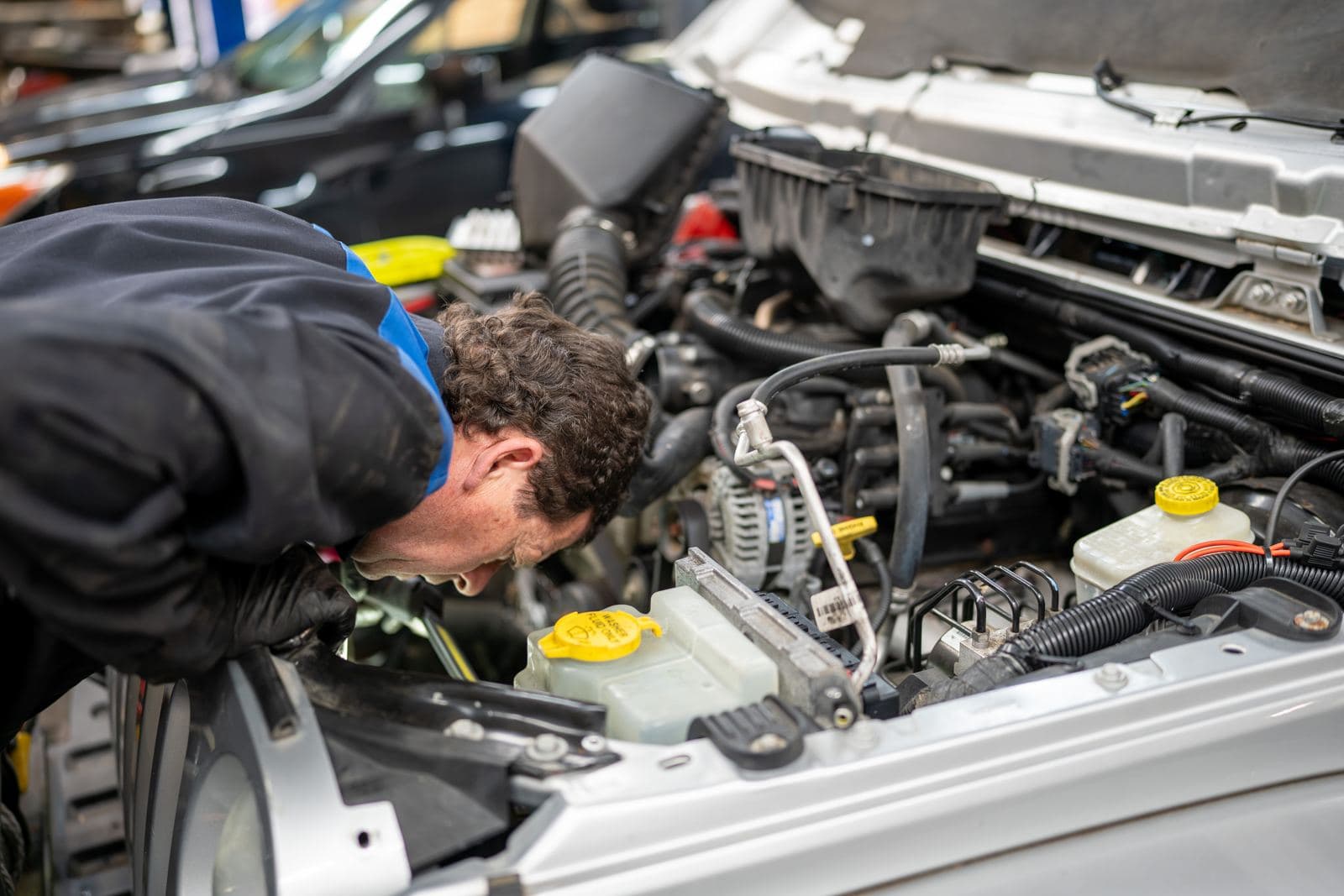
Coolant leaks don't always leave a puddle. Some only seep when the system is hot and pressurized, and some leak internally. A pressure test brings the system up to its normal operating pressure, which often makes a hidden leak show itself. We also check the coolant's level and condition.
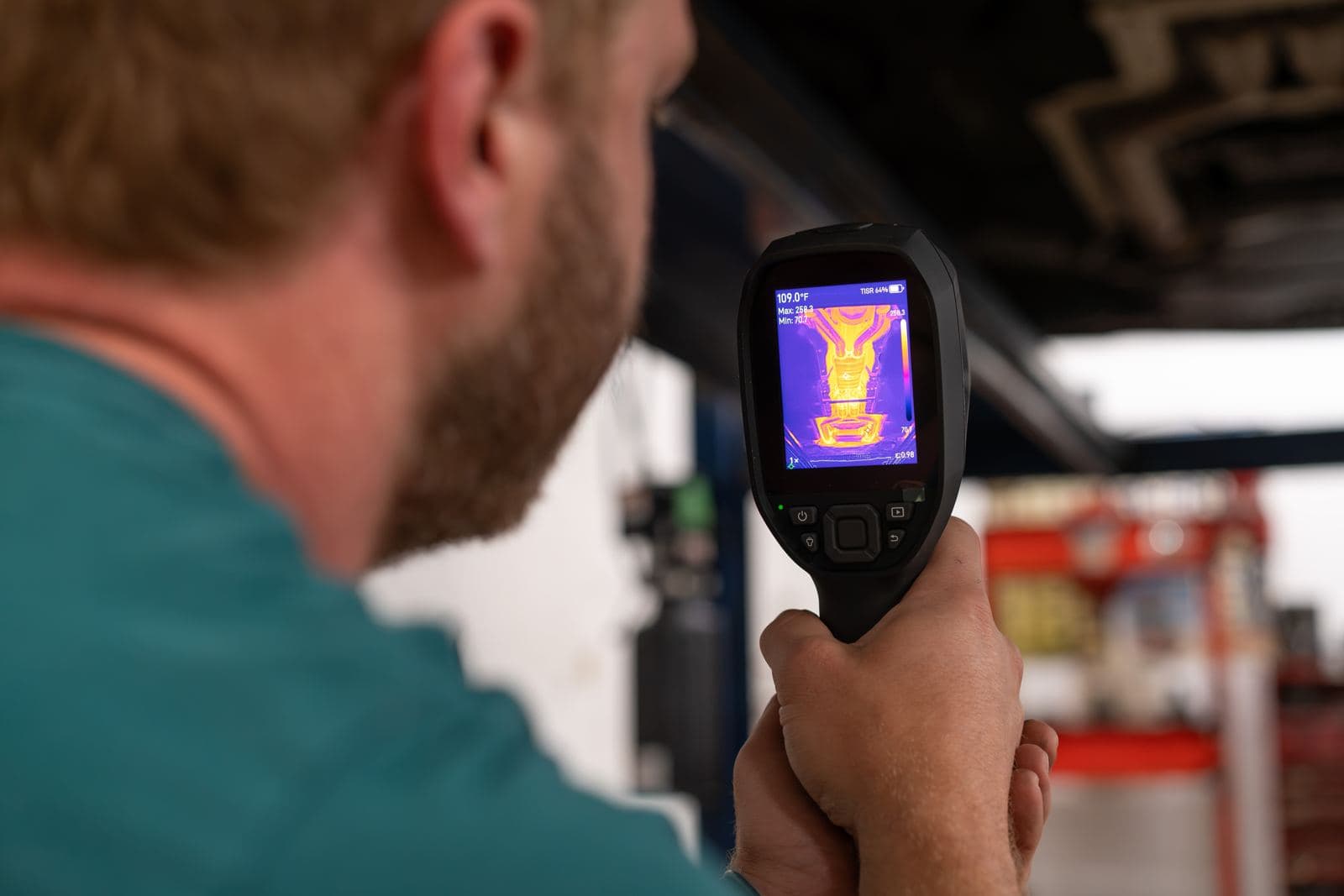
A thermal imaging camera shows how heat moves through the radiator and hoses, which helps us spot cold areas from a clogged radiator or a thermostat that isn't opening. With a professional scan tool, we watch live coolant temperature data and, on many vehicles, check the cooling fan's operation. If anything points to a head gasket, we test the coolant for combustion gases before recommending a repair.
Then we explain what we found and what it will take to fix, and nothing gets done until you approve it.
Why coolant service matters
Coolant does more than keep the engine from freezing. It raises the boiling point and carries additives that protect against corrosion. Those additives wear out over time, and worn-out coolant can start to corrode radiators, heater cores and other parts from the inside and shorten water pump life.
The type matters, too. Many manufacturers specify their own formulation, and mixing incompatible coolants can reduce protection and, in some cases, form sludge that clogs passages. We refill with coolant that meets your manufacturer's specification, follow the factory service interval, and can check your freeze protection before the first winter cold snap.
Bringing your car in
Request an appointment online or call us. Drop-off starts at 6:00 AM, and after hours you can leave your keys in the key drop to the left of the customer lounge door. It helps to tell us when the problem happens: cold starts, highway driving, idling or climbing hills.
We work on cars, trucks, vans and SUVs of all makes, domestic and import, including European models. Hybrids and EVs often have separate cooling loops for their batteries and electronics, so call first and we'll confirm what we can take on for your vehicle. Every repair is backed by our 2-year/24,000-mile warranty; learn more on our warranty page.
What We Work On
- Cooling system pressure testing to find leaks
- Thermal imaging to spot clogged radiators and stuck thermostats
- Radiator inspection and replacement
- Water pump replacement
- Thermostat replacement
- Radiator and heater hose replacement
- Cooling fan diagnosis and repair
- Coolant service with coolant that meets your manufacturer's specification
- Head gasket leak testing and repair
Every repair is backed by our 2-year/24,000-mile warranty. Warranty details
Common Questions
Can I just add water to my radiator?
In a pinch, plain water can get you a short distance, but it dilutes the freeze and corrosion protection and boils at a lower temperature than a proper coolant mix. Only add it once the engine has fully cooled, then have the system checked and refilled with the correct coolant mix soon, especially before freezing weather.
How often should coolant be replaced?
It depends on your vehicle and its coolant. Many newer vehicles use long-life coolant with a first change around 100,000 miles or more, while older vehicles and some coolant types need it sooner. Your owner's manual lists the interval. We follow your manufacturer's schedule and can track your service history and send reminders.
Is it safe to drive with a small coolant leak?
Not for long. Small leaks usually get bigger, and once the level drops far enough the engine can overheat quickly. Keep an eye on the reservoir and the temperature gauge, and bring it in soon. If the level falls fast or the gauge climbs, stop driving it.
Why is my heater blowing cold air?
Low coolant is one of the most common causes, and low coolant usually means there's a leak somewhere. A thermostat stuck open, air trapped in the system, a clogged heater core or a faulty blend door can also do it. It's worth checking soon, because the same low coolant that gives you cold heat can lead to overheating.
More questions? See our FAQ or call (253) 884-3431.
Related Services
Engine Repair
Leaks, overheating, timing belts and chains, head gaskets and noises, plus JASPER remanufactured engines when repair isn't worth it.
Check Engine Light Diagnostics
Check engine light on or running rough? We test to find the real cause, then explain it before any repair.
Oil Changes & Maintenance
The oil and filter your manufacturer specifies, a multi-point inspection every visit, and factory schedules tracked for you.
Schedule Cooling System Repair
We’re open Monday–Friday, 6:00 AM–2:30 PM, right next to Key Center. Drop off at opening, or leave your keys in the after-hours key drop.